Designing for Generosity
What happens if we turn economics on its head? Instead of assuming people aim to maximize self-interest, what if we design for selflessness? These four shifts mark the emergence of a gift culture.
Designing For Generosity
In this TEDx talk, ServiceSpace founder Nipun Mehta explores the question: what designs emerge if we assume that people want to behave selflessly? Drawing from projects like Karma Kitchen, Smile Cards, and countless experiments in gift economy, he outlines the four key shifts that mark a gift culture.
The Four Shifts of Gift Culture
Economics is built on the premise that people aim to maximize self-interest. What if we turn that around? These are the four shifts that emerge when we design for generosity instead.
Consumption → Contribution
An average American sees 3,500 ads a day, mostly unconsciously. Each one tells you that you're incomplete as you are — you need their product before you can be whole.
It's hard to escape this consumption conditioning. But what if we flip it? What if we open each door and ask, "What can I give?" instead of "What can I get?" That question changes everything.
In Practice: Smile Cards
Wallet-sized cards you leave behind after an anonymous act of kindness. They tell the recipient: you don't know who did this, but keep the chain going. It's an invitation to shift from getting to giving.

Transaction → Trust
You can't shake hands with a clenched fist. Transaction assumes we need contracts, enforcement, and guarantees. Trust assumes something different: that people, given the opportunity, want to be generous.
At Karma Kitchen, your check reads zero because someone before you paid for your meal. Business school folks scratch their heads: "You just trust people?" We didn't know how long the chain would continue. It's been 19+ years.
The Research
A UC Berkeley study found that when people were told "someone before you paid for your experience," they gave 3x more than a simple pay-what-you-want model. Awakening interconnection changes behavior.

Isolation → Community
Community isn't just people coming together — it's how they connect. Think of graphite and diamond: same carbon atoms, different configuration. The bonds make all the difference.
You can be Facebook friends (loose ties), go to movies together (deeper ties), but when you serve others together, you create gift ties — and those are priceless.
In Practice: Free Car Wash
A 10-year-old threw a birthday party, then invited friends to wash strangers' cars for free. "Is this a fundraiser?" "No, we're just practicing generosity." The connection between kids and strangers was amazing — but even more amazing was how the kids bonded with each other through serving.

Scarcity → Abundance
This is a mindset — tapping into "enough." When you say abundance, people ask: "Do you really think there's plenty for everybody?"
Gandhi tackles it in one sentence: "There is enough for everyone's need, but not enough for everyone's greed." Most people see scarcity everywhere — scarcity of safety, resources, time. But some look with new eyes and see what they can give.
In Practice: Fruit from Neighbors
In East Oakland, at the border of two gangs, volunteers asked neighbors: "Your fruit trees are going to waste. Can we pluck them and give them away?" Neighbors became friends. Recipients weren't just receiving — they were contributing to a new story of abundance.

What is Giftivism?
When these small acts of generosity get connected, they rekindle a gift economy. In a gift economy, it's the circulation of gifts that leads to the vitality of society — not hoarding, not accumulation.
We call this practice giftivism: radically generous acts that change the world. The marker of giftivism is that it's for the 100%. There's no enemy, no opponent — because inner transformation is tied to outer manifestation.
"Giftivism: the practice of radically generous acts that change the world."

Gandhi

Mother Teresa
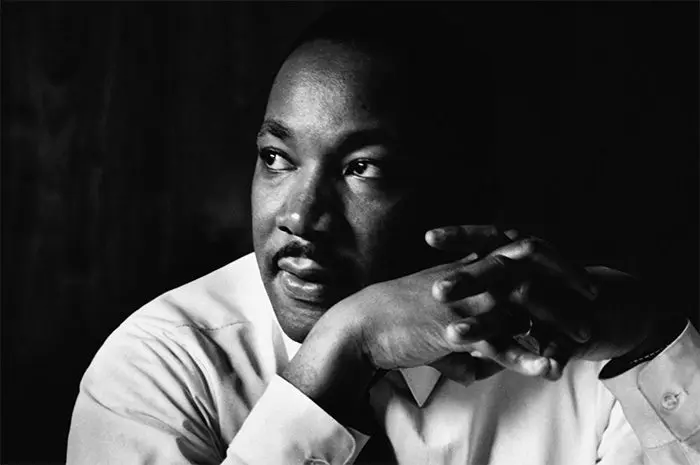
Martin Luther King

Dalai Lama
César Chávez

Vinoba Bhave
The Julio Diaz Story
Giftivism isn't reserved for the Gandhis and Mother Teresas of the world. It's available to everyday people in everyday moments.
Julio Diaz, an everyday person from New Jersey, was getting off the subway when a teenager approached him with a knife. "Give me all your money," the kid demanded.
Julio handed over his wallet. As the kid turned to run, Julio called out: "Hey, it's a little cold out. Do you want my jacket too?"
The kid was blown away — this wasn't in Robbery 101. He came back, and the energy was completely different. They started talking. Julio invited him to dinner. At the end of the meal, Julio said, "I'd love to treat you, but you have my wallet."
The kid gave it back. "Can I ask for one more thing?" Julio said. "Can I have your knife too?" And very naturally, the kid handed it over.
"Julio tapped into that spirit of inner transformation. He didn't see someone taking from him — he just wanted to blow him away with generosity. And underneath that generosity is an inner transformation. Once we tap into that, all kinds of new possibilities become available."
The Four Shifts at a Glance
Appreciate what you receive, pay forward
Rely on interconnectedness
Cultivate gift ties
Discover your gifts through gratitude
As we say at ServiceSpace: "Change yourself and change the world."
If we make that inner change, outer change is bound to come — when it comes from the inside out.
Experience These Shifts
Ideas become real through practice. Visit a Karma Kitchen, volunteer, or start experimenting with generosity in your own life.